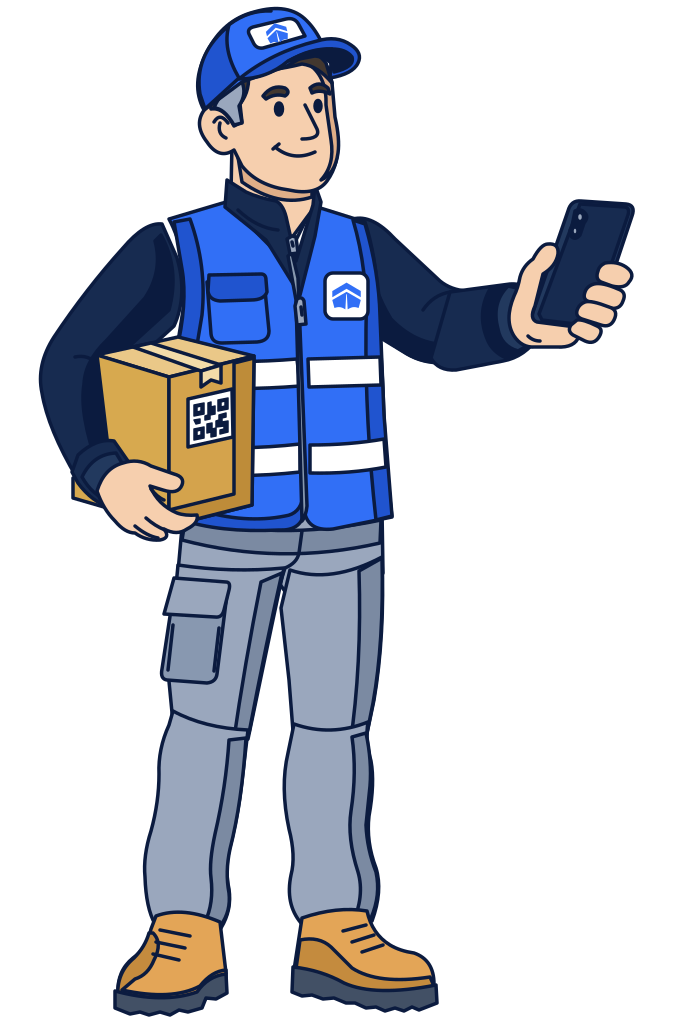
How I designed a cast, a world and a 60-second film for AYMEX Cargo: from the first rough characters to the finished, fully animated explainer.
A 60-second explainer: one parcel travelling along one line, from the London counter to a doorstep in Colombo.
AYMEX Cargo makes freight software: QR tracking, a six-stage workflow, WhatsApp updates and digital proof of delivery. It needed a film that explains all of that in a minute, to people who just want to know where their boxes are.
Logistics films usually look the same: stock icons, a map, a truck. AYMEX needed its own world: a cast people warm to, drawn as one system, and built in layers so every character could actually move.
Before drawing anything, I mapped what the software actually does and what one shipment goes through. Then I studied how the best illustration systems in logistics stay friendly without becoming childish.
Every scene had to earn its place by showing one of these.
A single checkpoint line runs under every scene. Each scan turns the next point green, so the viewer always knows where the parcel is.
Inspired by large logistics illustration systems: one navy outline, flat colour, tall, friendly people, and vehicles drawn to one scale. Inspired by, never copied.
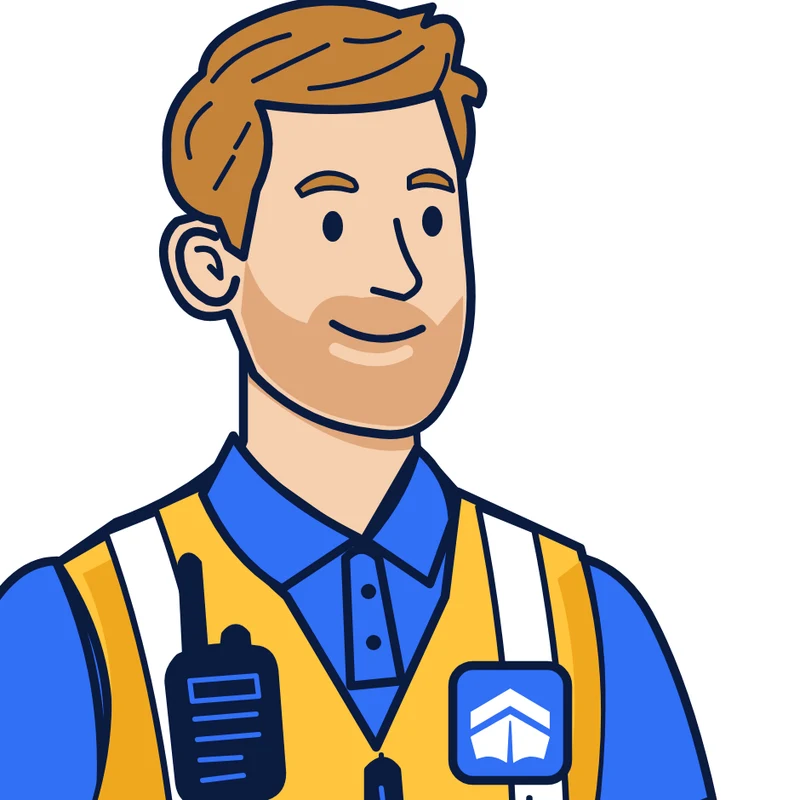
The characters were the hardest part. Each round was reviewed against one standard: premium and detailed, never "dodgy" or generic. The feedback that shaped each round is quoted below.
Simple geometric people. Readable, but far too plain.
Don't create very basic characters.
One navy outline and flat colour, so everything feels drawn by one hand.
Outlined, like Amazon.
Longer legs and smaller heads: more grown-up and more premium.
Tall characters like this.
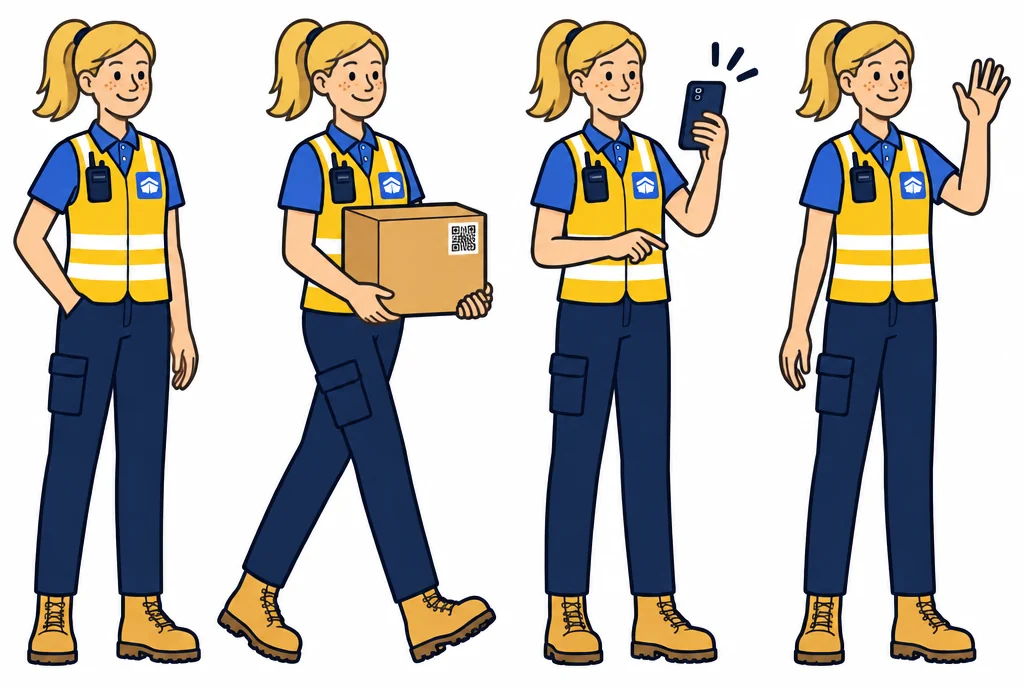
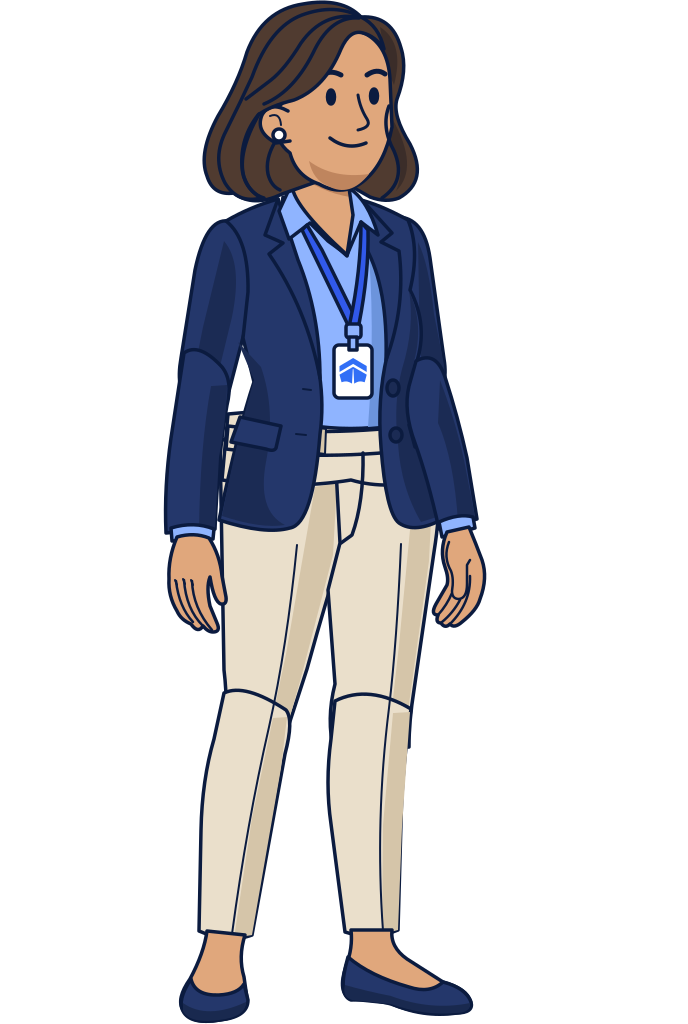
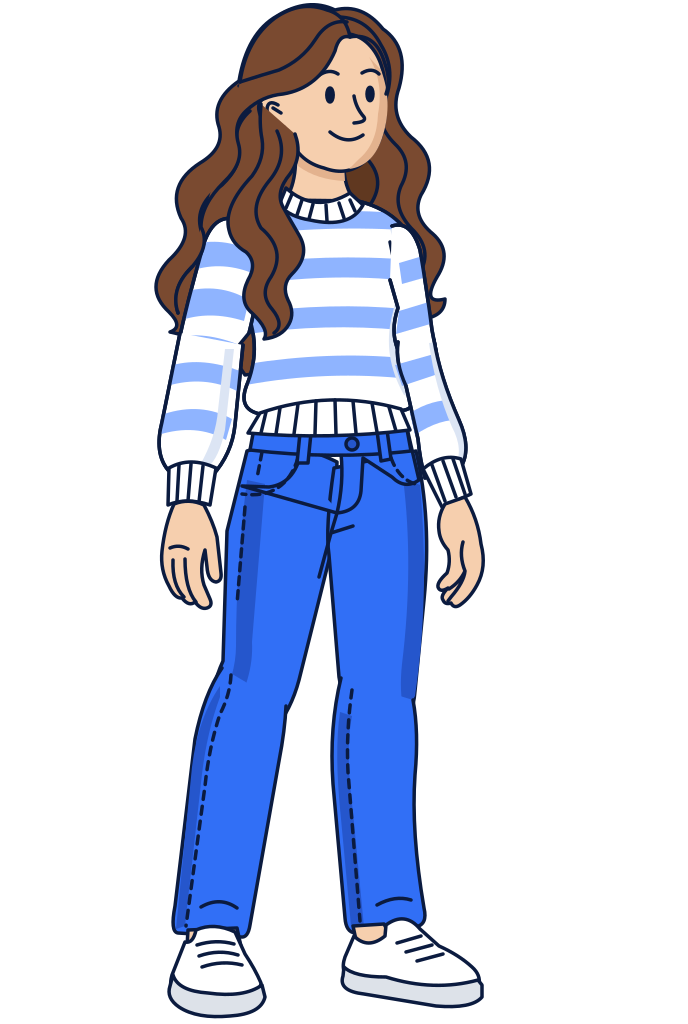
A UK cast for a UK company, with the first warehouse woman kept as an option.
Something British style.
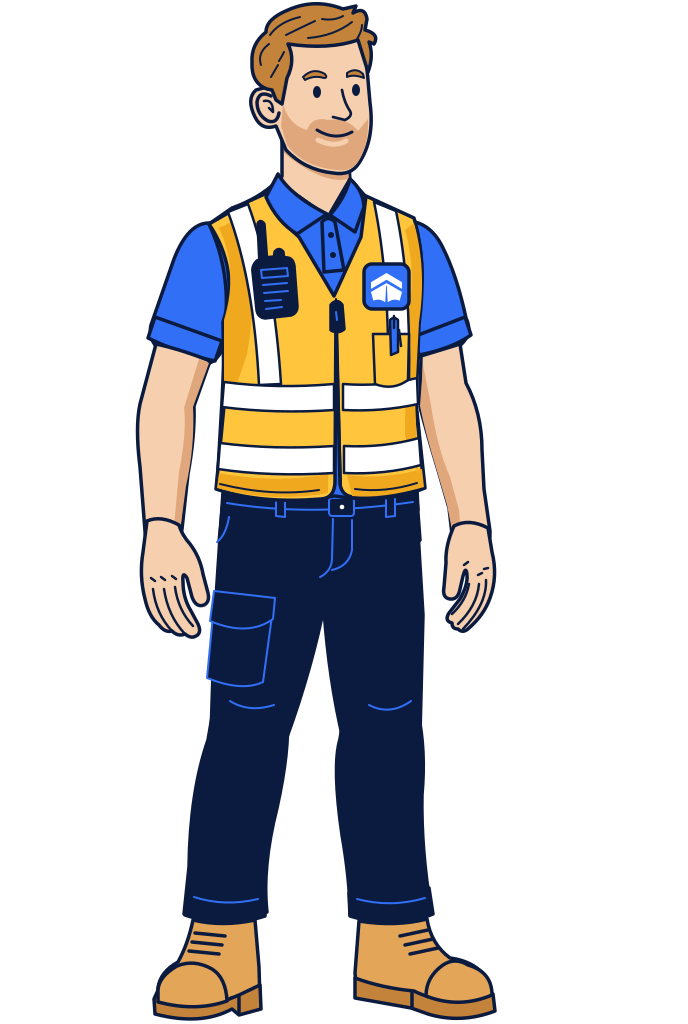
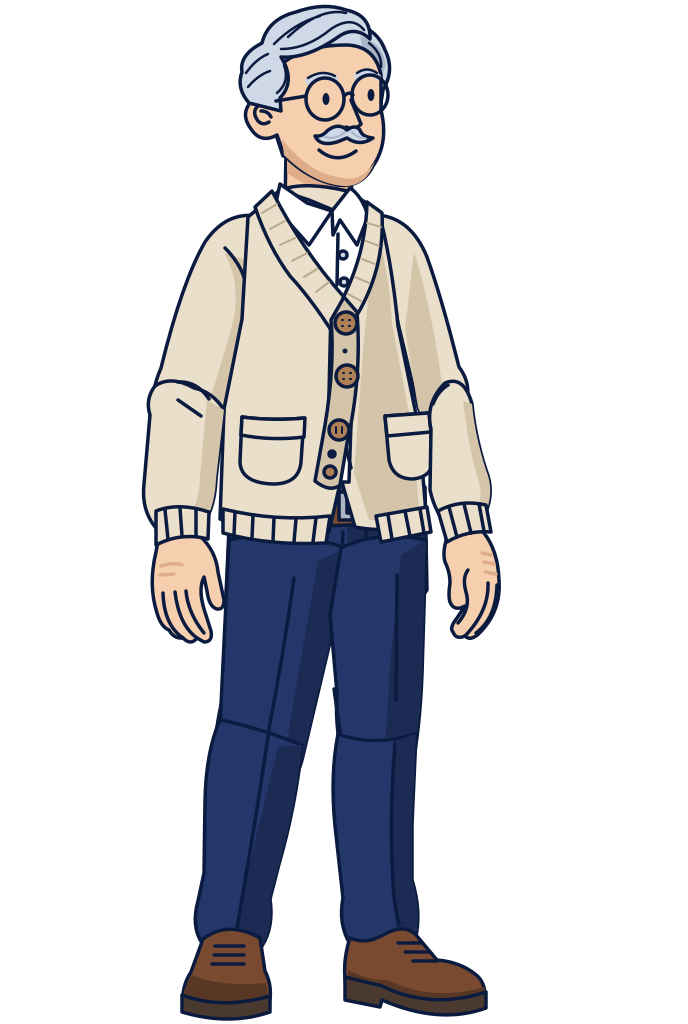
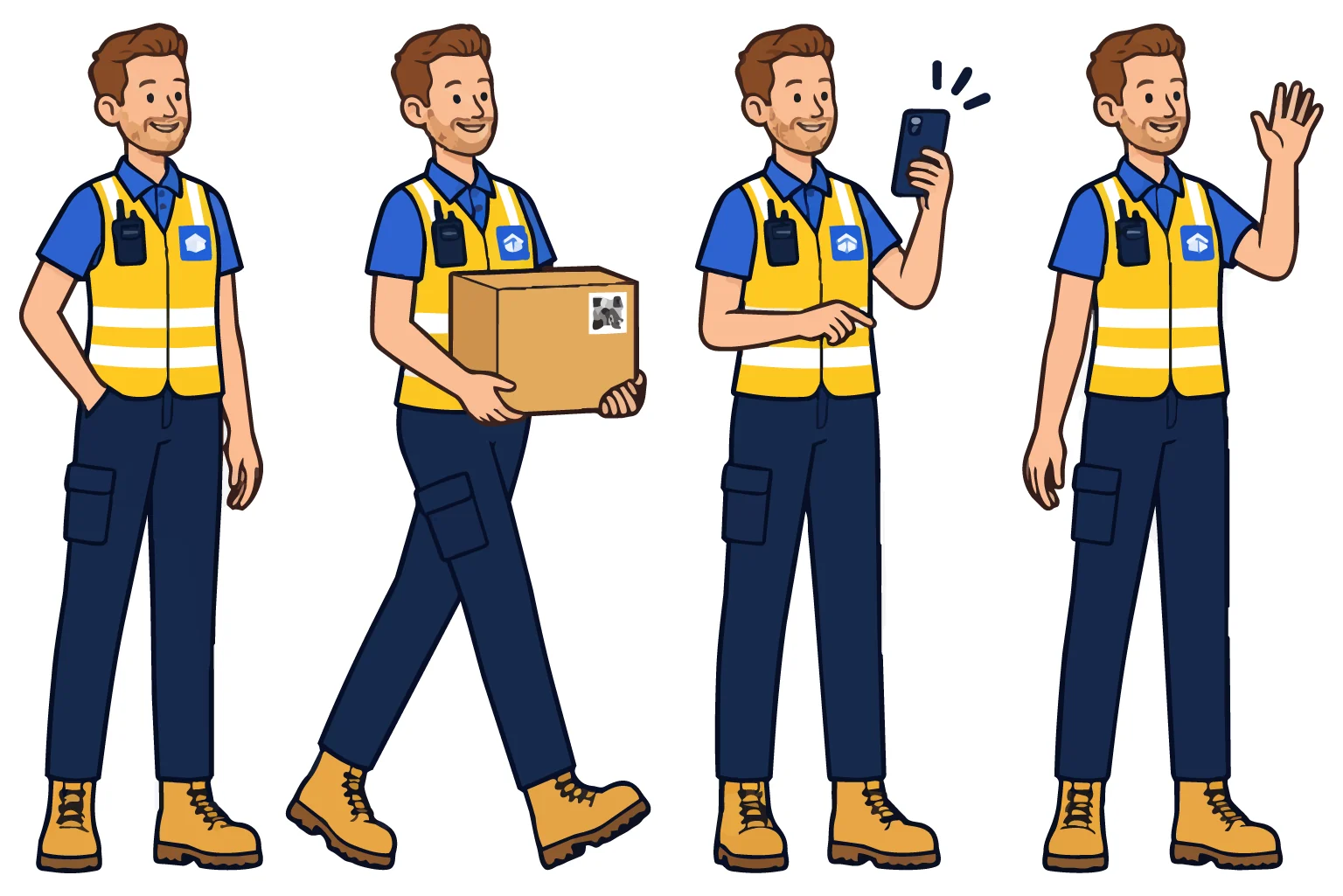
Clean strokes, real logo, three-line laces, hands drawn properly, every limb on its own layer.
Approve cast.


The concepts were raster images. The quick route was Illustrator's Image Trace. I tested it on one character, zoomed in, and dropped it: animation needs clean shapes, not hundreds of fragments.

Shown at the same zoom: a blotchy beard, lumpy outlines, a guessed logo, and colour islands that break the moment you try to move a limb.

Redrawn as clean vector: one 3.5 px navy outline, round joins, the exact AYMEX mark, and every body part a separate, named group.
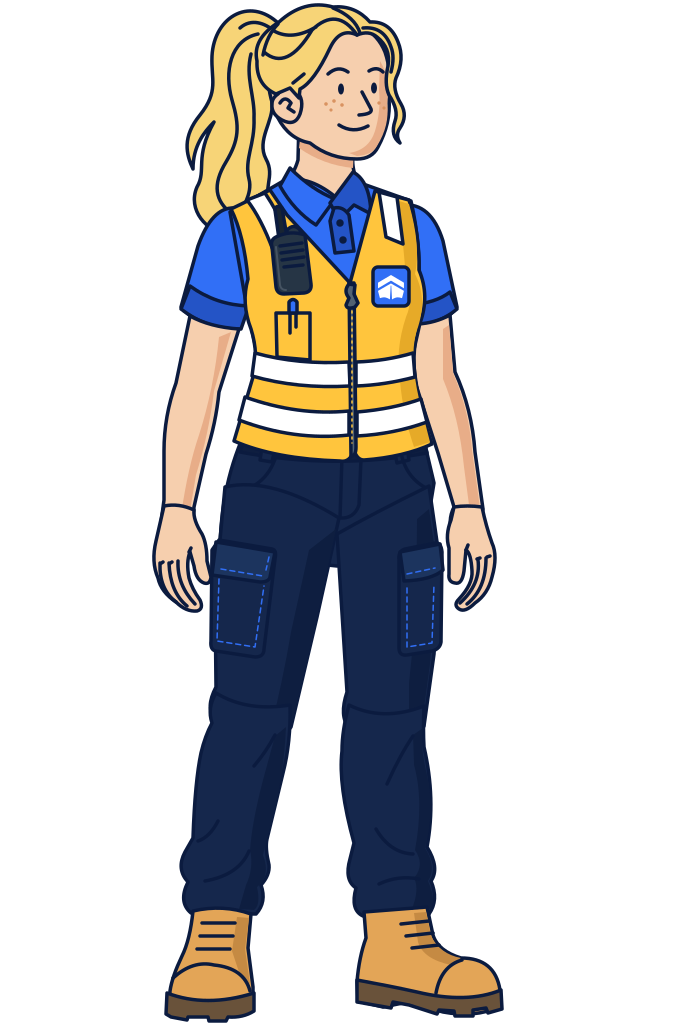
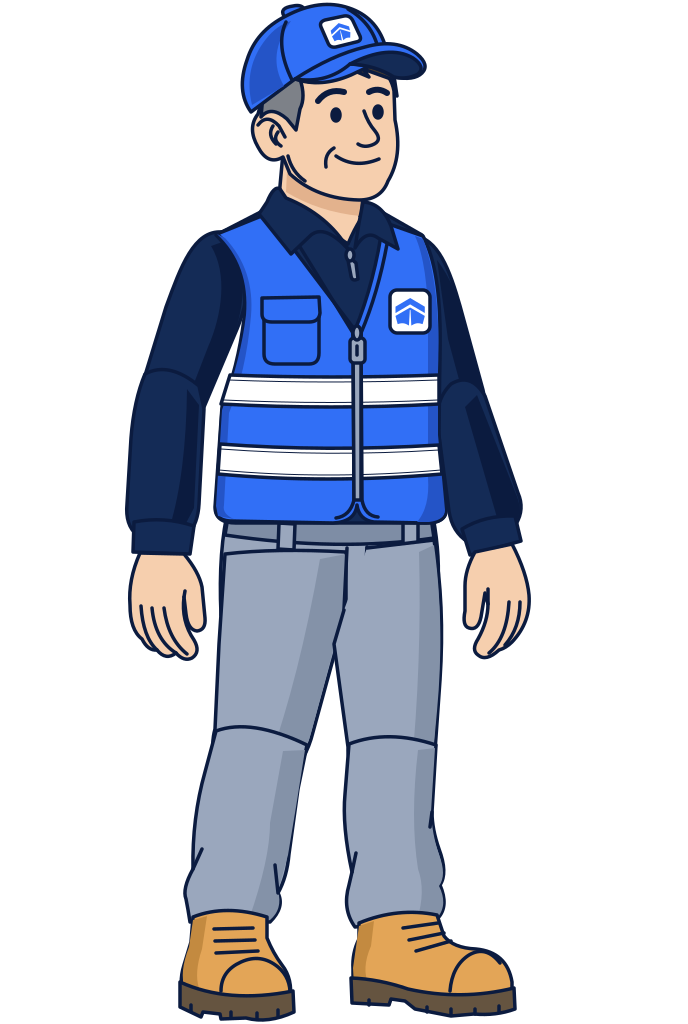
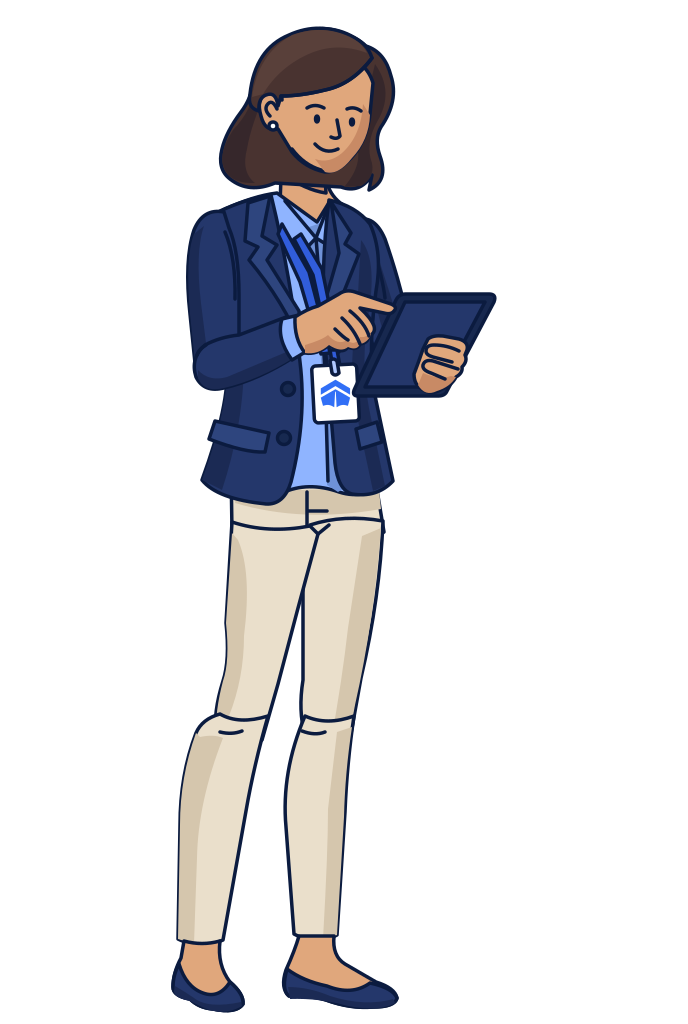
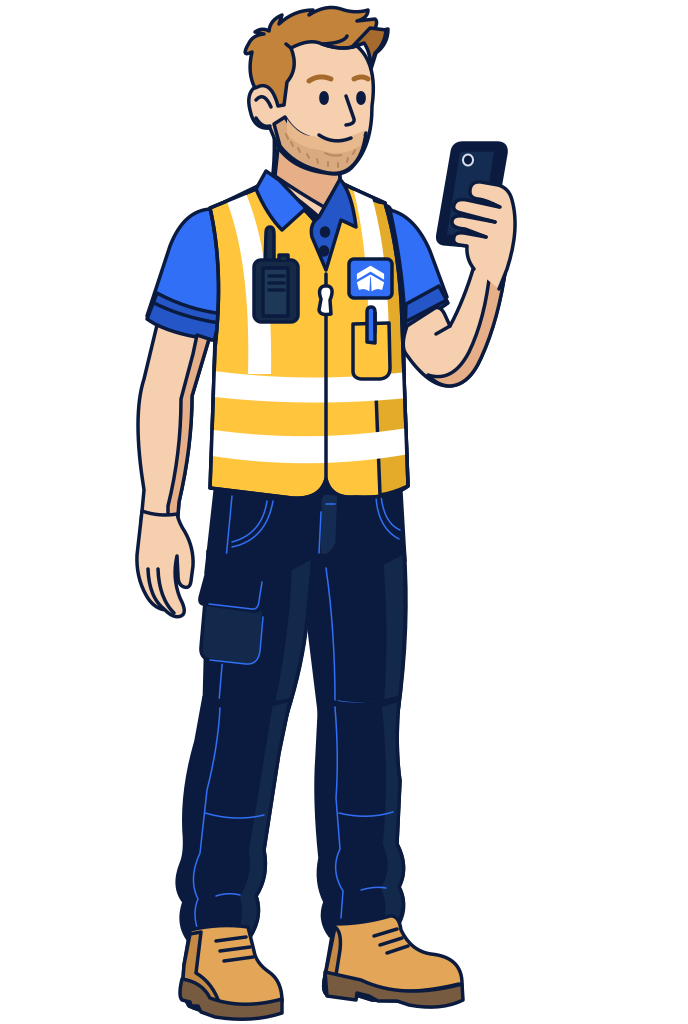
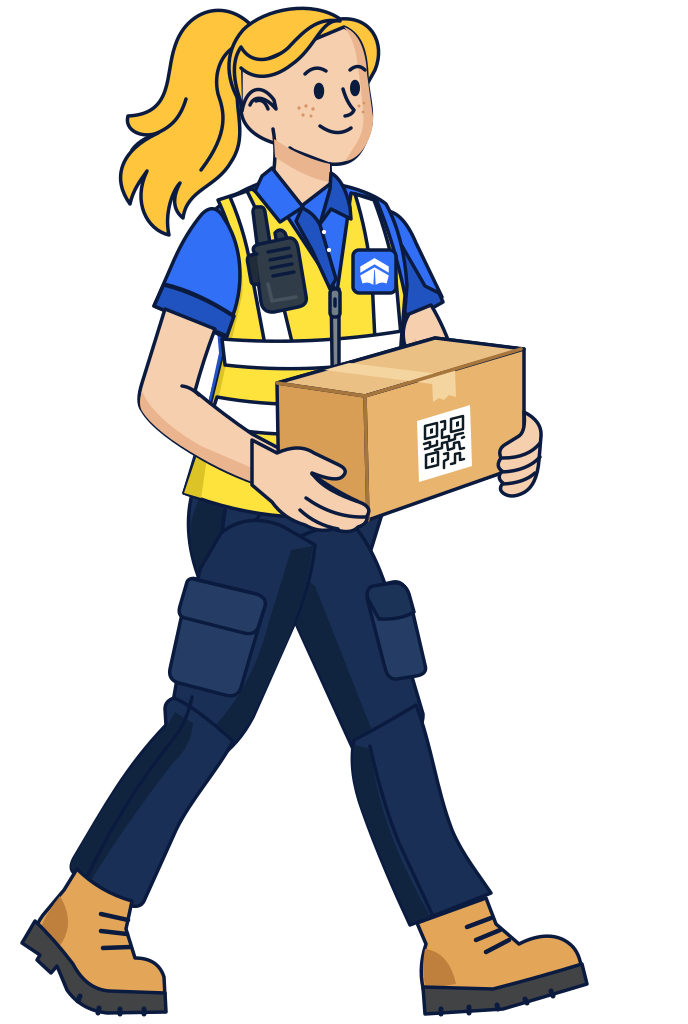
Every character owns one moment of the parcel's journey. Pick someone to meet them: their job, what they wear, and the details that make them feel real.
Navy #0B1B3F at 3.5 px with round joins, on everything.
Left blank when drawn, then the exact logo vector placed on, a little small.
Exactly three short lines, no crosses, so boots stay clean at any size.
Hi-vis vests with proper reflective bands for everyone on site.
Characters were drawn as puppets from the start: thighs, shins, forearms and hands are separate groups with overlapping rounded joints, so a knee or elbow can bend without a seam. This is the real file, pulled apart.
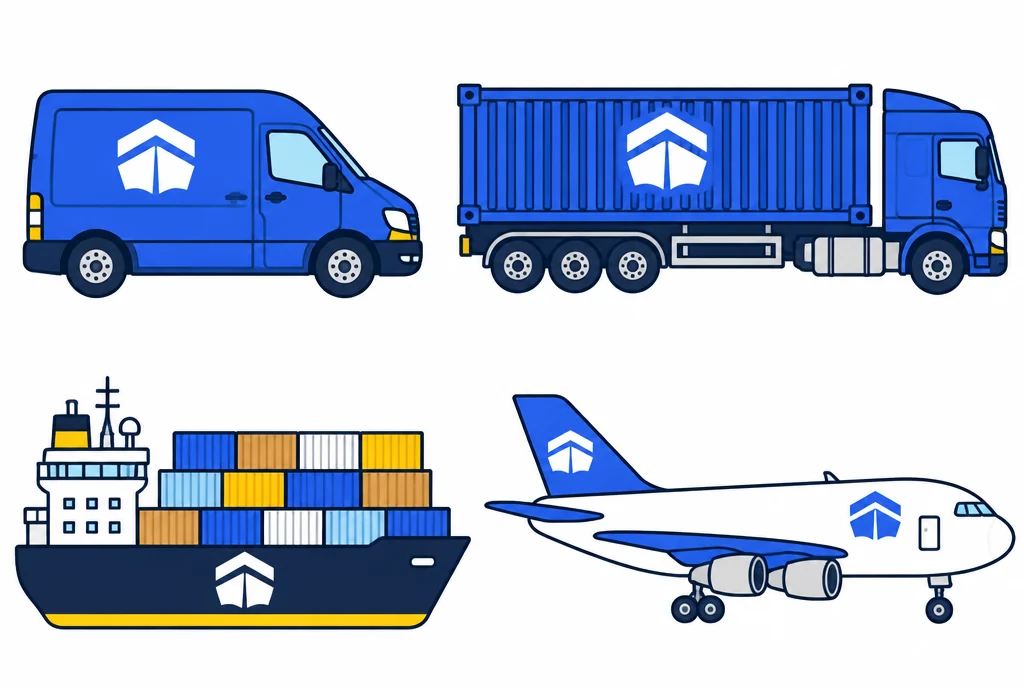
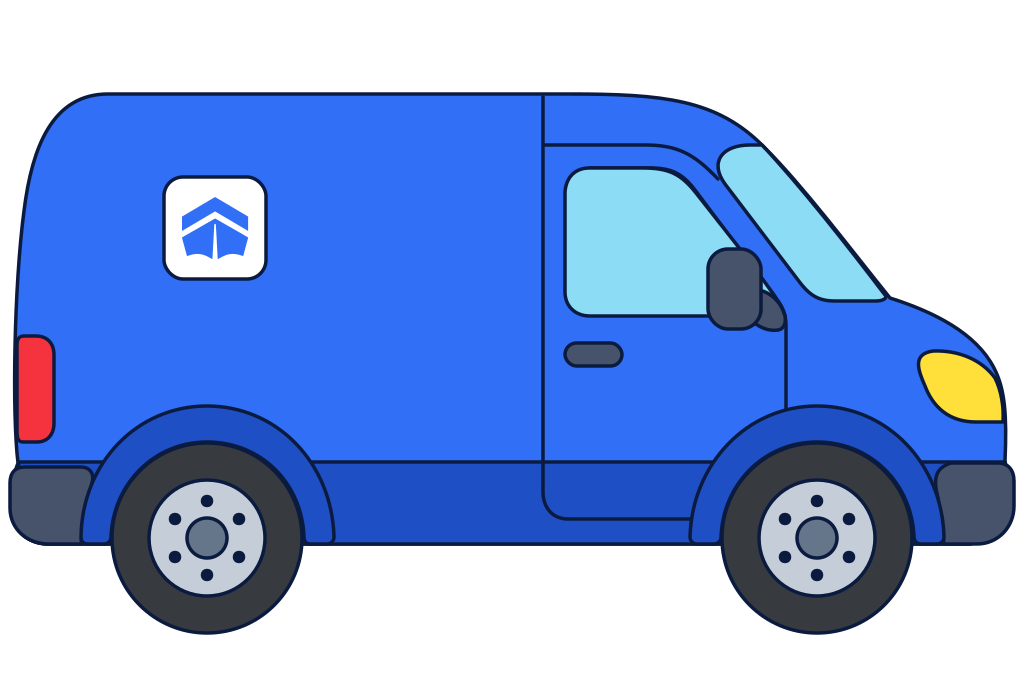
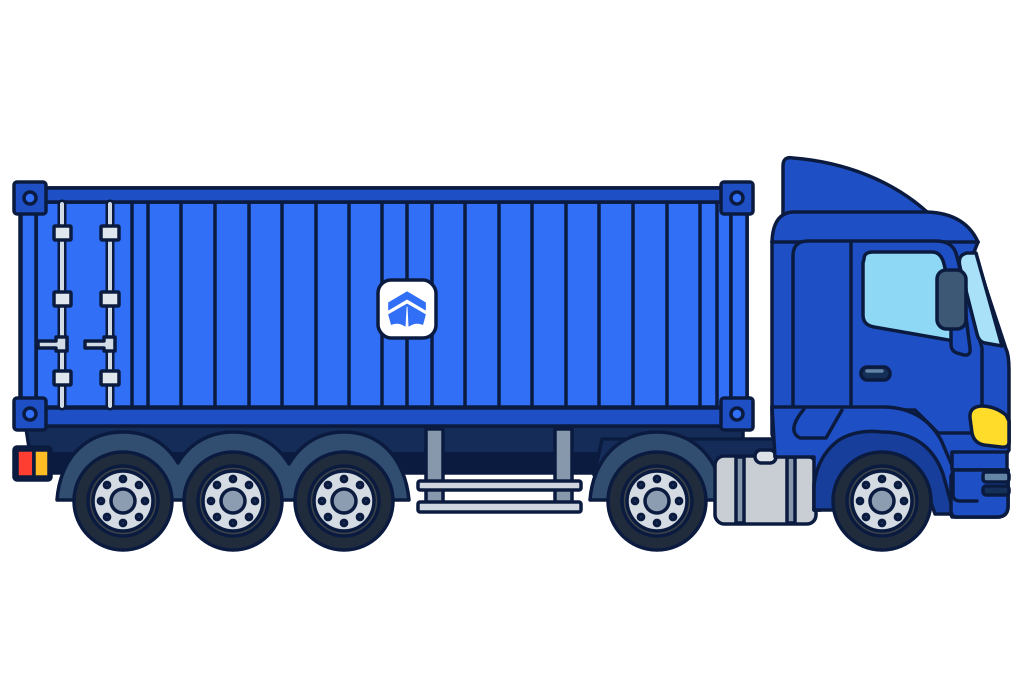
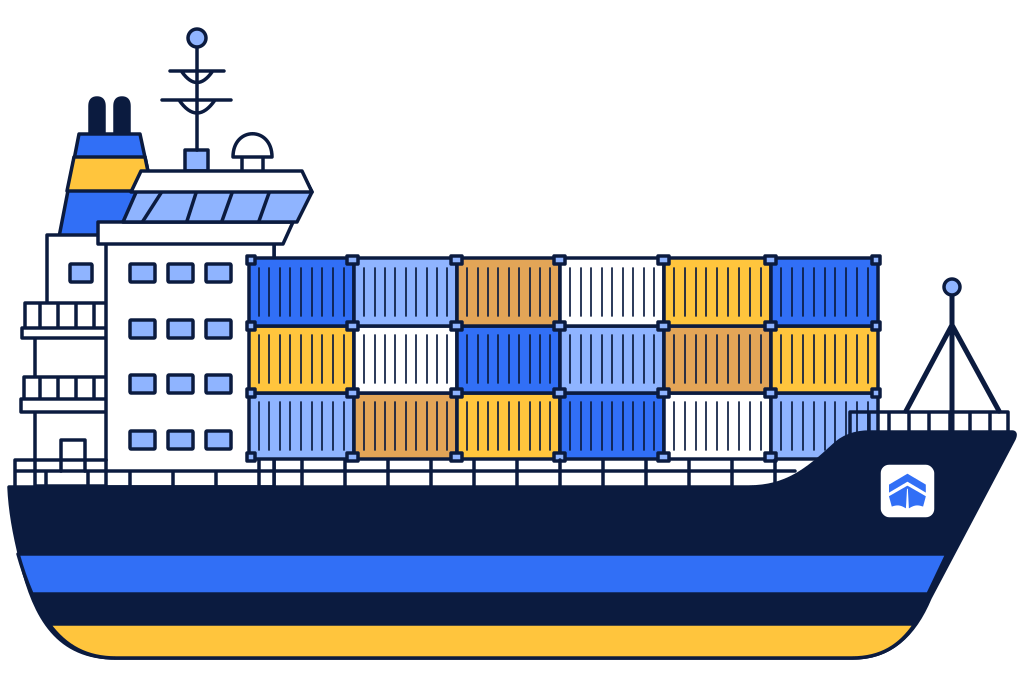
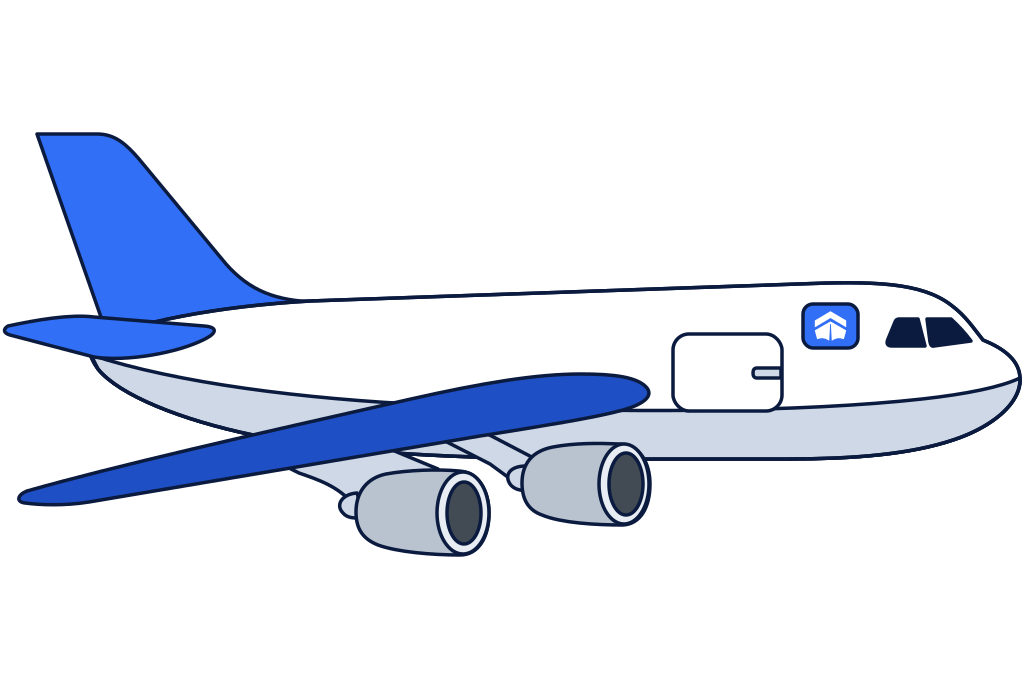
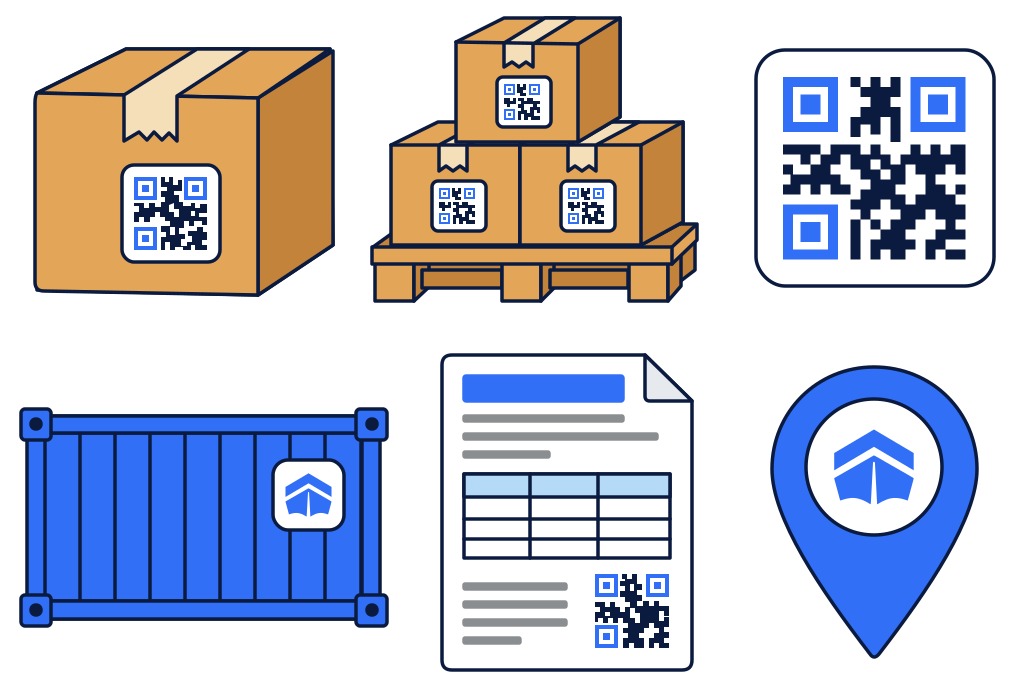
The same outline and palette, scaled to the cast. Every item carries the AYMEX mark where a real company would put it: on the van door, the container, the label.
Last mile. Logo on the side door, wheels as separate layers to spin.
Port to warehouse. Five wheels, one long container.
Three rows of containers in brand colours, built to bob on the waves.
For air freight. The tail carries the mark.
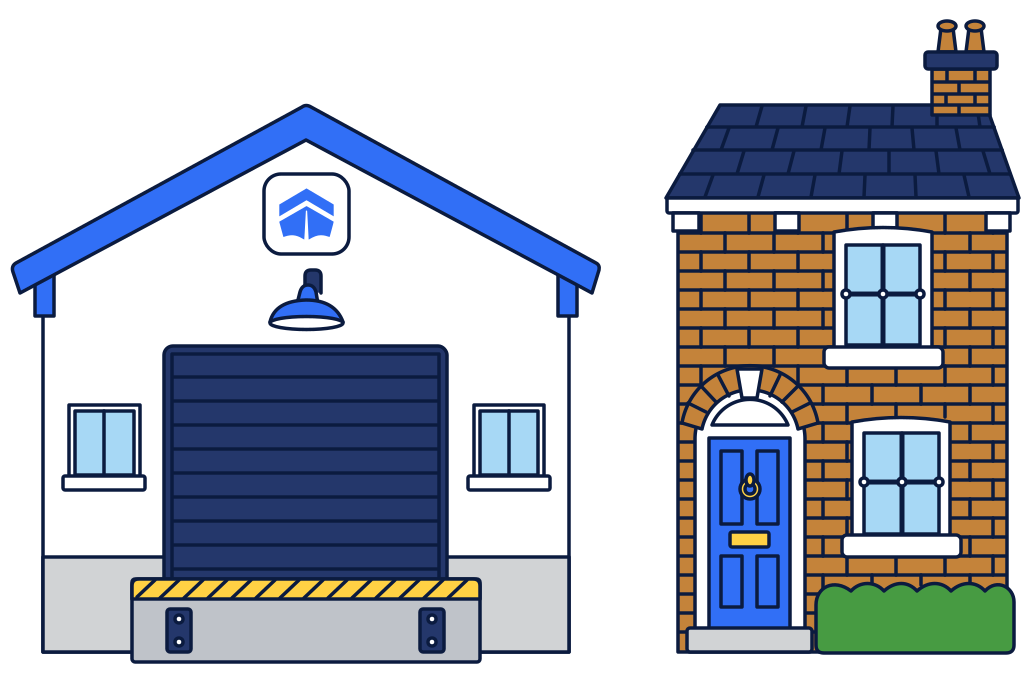
A branded warehouse with roller shutter and loading dock, and a British terraced house with brickwork, slate roof and sash windows.
Box, pallet, QR label, container, bill of lading and location pin.
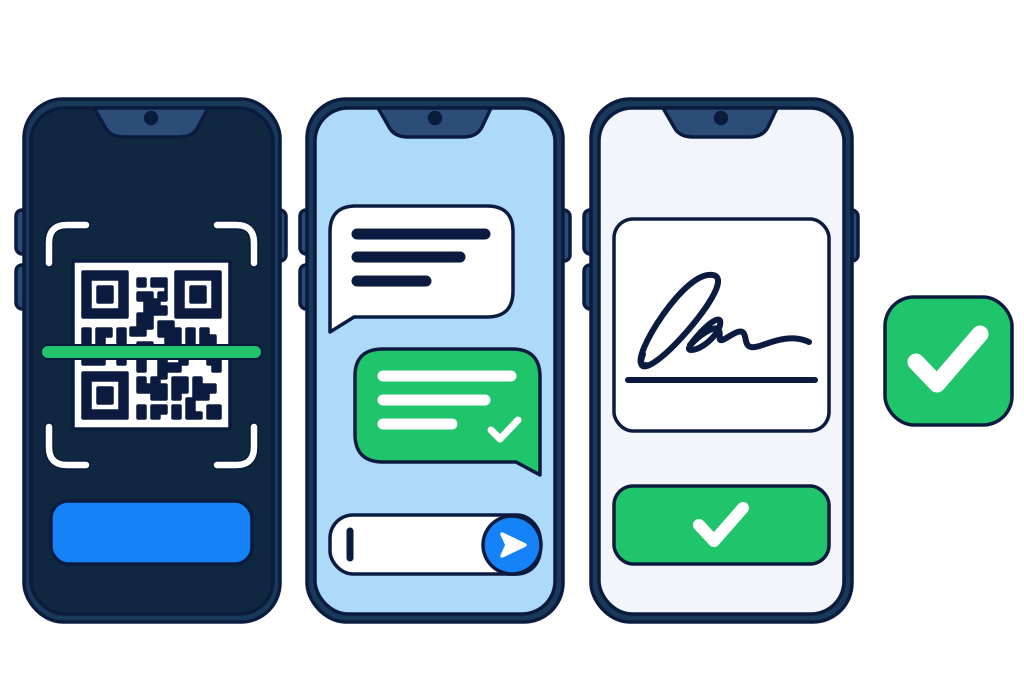
Scan, WhatsApp alert, signature and the green "confirmed" tick.
Early scenes had a warehouse barely taller than the worker beside it. Everything was rescaled to one rule: houses about 2.2× a person, the warehouse nearly 2×, the lorry 1.6×. Small, but it is what makes the world believable.
Standing characters don't tell stories. Each person got a pose for their moment in the film, drawn in the same layered way so it could be animated in and out.
About 135 words for a British narrator, with short captions so it works with the sound off. Every beat moves the parcel one checkpoint along the line.
Still chasing cargo by phone? Missed calls. Paper bills. Customers asking where their shipment is.
The old way: a clerk at a desk, the phone ringing, paper piling up. Coral warning colour.
Aymex Cargo puts every shipment on one line you can see.
The mess sweeps away, the logo lands and the checkpoint line draws across the screen.
It starts at booking. Enter the details once, and the bill of lading and QR label are ready in seconds.
The sender hands over the parcel; document and label pop out. Checkpoint 1 turns green.
At the warehouse, one scan from any phone confirms it's in.
The warehouse lead scans; a green beam. Checkpoint 2.
By sea or by air, every checkpoint is a single scan.
Ship and plane cross; the line carries the parcel over the water.
And every scan sends your customer a WhatsApp update, automatically.
The lorry arrives; a phone lights up with the alert.
Drivers get their run by secure link. No login, no app.
The van pulls up at the terraced house; the driver checks his phone.
At the door: scan, sign, photo. Proof of delivery, done.
The receiver signs; a big green tick. Every checkpoint is green.
Fewer support calls. Zero lost cargo. Aymex Cargo. Book your free demo.
The results as big numbers, then the logo and the web address.
One frame from each beat of the finished film. Captions sit top left, the checkpoint line runs along the bottom, and the people and kit do the explaining.
The narration was recorded first and timed beat by beat. Then the animation was built to that timing, so every move lands on the words.
A calm, friendly UK voice, about 135 words, paced at a natural reading speed.
A light, optimistic track that steps up when the logo lands and settles under the voice.
Phone rings and paper for the old way; scan beeps, a WhatsApp ping and a delivery chime for the new.
Motion studies and easing curves worked out in After Effects, then the scenes built from the layered vectors in HyperFrames with GSAP, every move keyed to the voice.
Story, beats and narration copy
Cast, kit and poses as layered vector
Animation, timing and render
Voice, music bed and effects